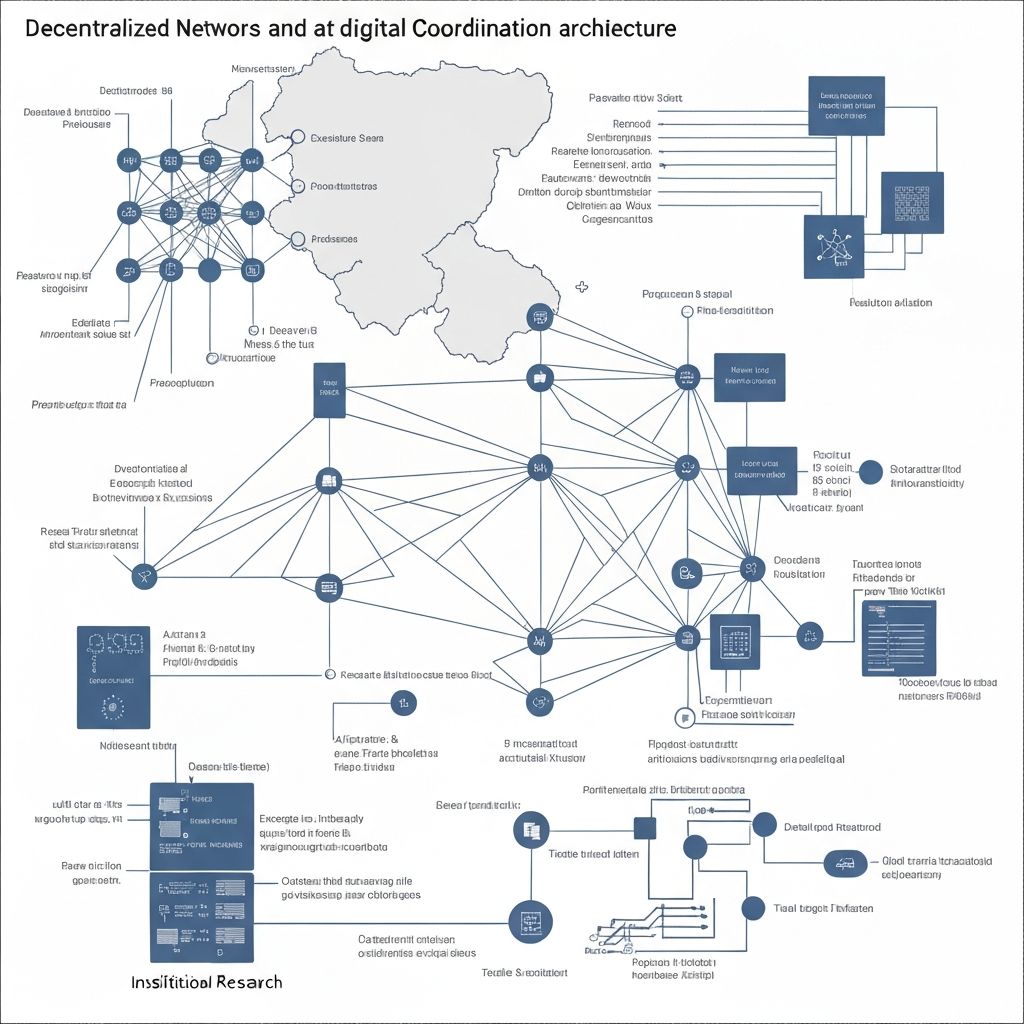
The past two decades have been defined by a particular model of digital coordination: centralized platforms that aggregate users, collect data, and mediate interactions. Facebook, Amazon, Google, and similar services became paradigmatic examples of how digital coordination could be organized. Yet this model has increasingly revealed its limitations and liabilities. A new generation of researchers, practitioners, and policymakers are exploring fundamentally different architectures for how digital coordination could work.
The Platform Consolidation Model
Platform businesses emerged in the 1990s and 2000s as a novel organizational model for digital coordination. Rather than owning physical assets or directly producing goods, platforms created environments where different parties could interact. eBay brought buyers and sellers together. Uber matched drivers and passengers. YouTube provided infrastructure for content creators and viewers.
The economic logic of platforms created powerful incentives toward consolidation. Winner-take-most dynamics meant that having more participants made a platform more valuable, creating network effects that favored larger services over smaller competitors. This led to the emergence of dominant platforms in various domains, each controlling the infrastructure through which coordination occurred.
This model generated tremendous value and innovation. It also enabled rapid scaling and global reach. However, it concentrated enormous power in private companies that could unilaterally change rules, extract data, set fees, and moderate content with minimal accountability to users or the public.
Open and Interoperable Alternatives
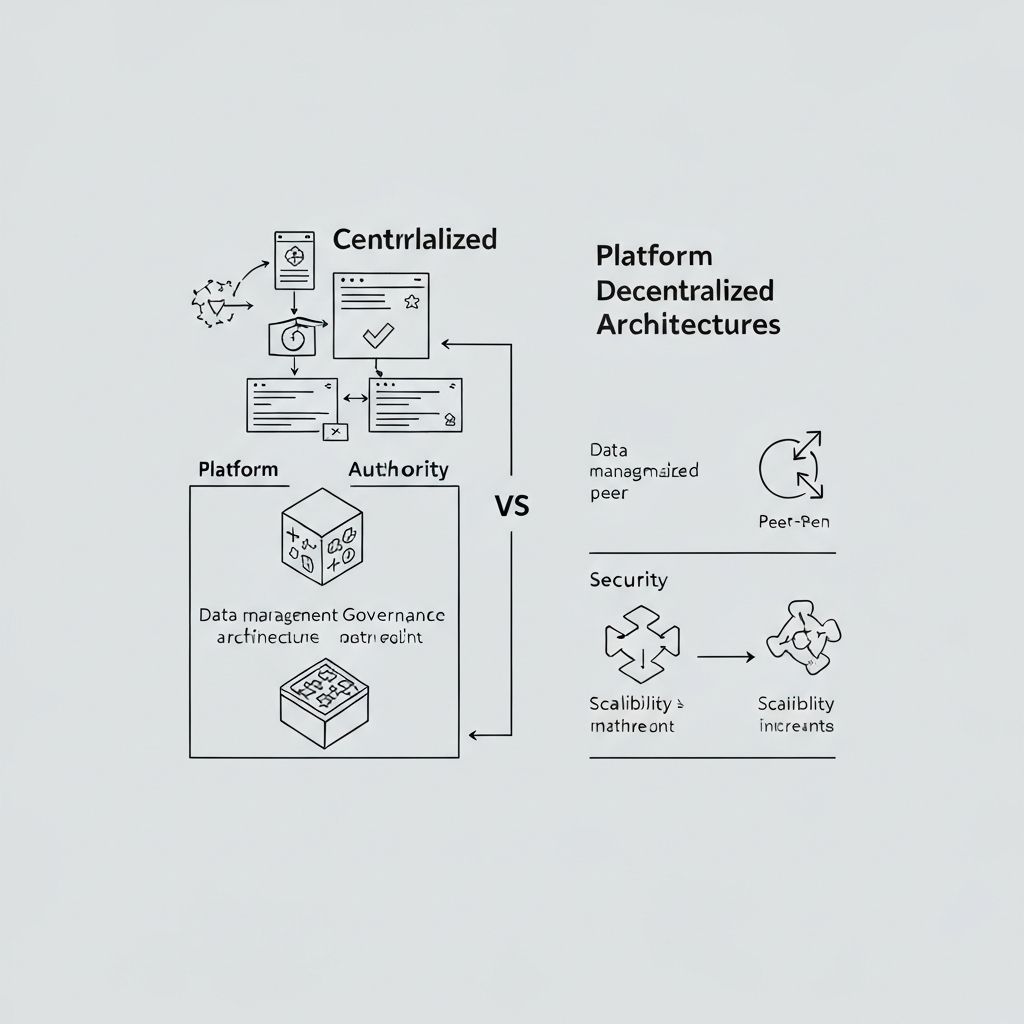
One emerging model emphasizes openness and interoperability. Rather than coordinating through a single platform, coordination occurs across a federated network of interconnected services. Email provides a historical example: instead of using a single email platform, users can have accounts on different providers that all communicate through open protocols.
The social web protocol ActivityPub demonstrates how this could work for social media coordination. Multiple independent services can offer social networking capabilities, but they're interoperable—you can follow accounts across different services, and your content can be shared across the network. This architecture preserves choice for users while maintaining coordination at the network level.
The economic advantage of this model is less obvious than platform consolidation. It requires coordination around common standards and protocols, which is technically and socially complex. However, it offers significant advantages: no single entity has monopolistic control, users can switch services without losing their networks, and data remains distributed rather than concentrated in a single repository.
Public Digital Infrastructure Models
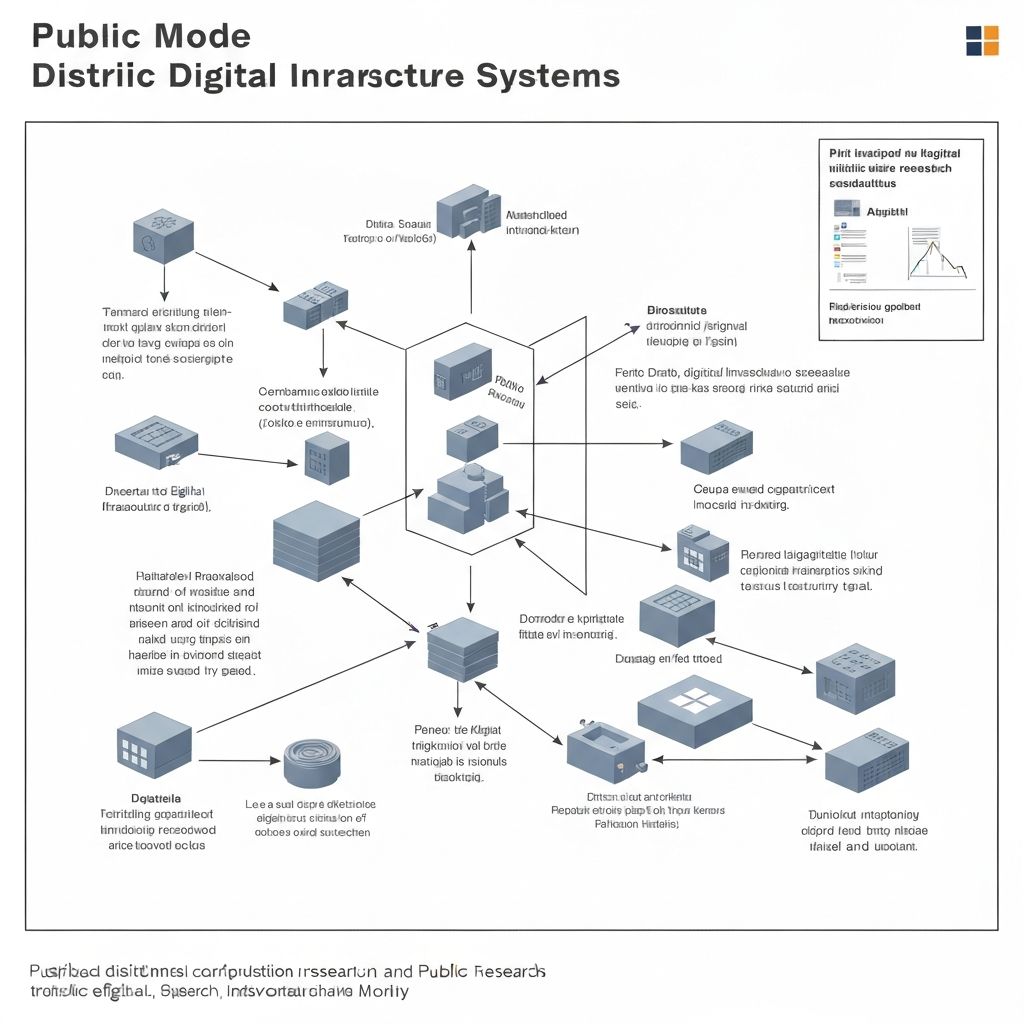
Another emerging model treats digital coordination as public infrastructure, similar to electricity or transportation networks. Rather than relying on private platforms, cities and nations build public digital infrastructure that private services and individuals can build upon.
Taiwan's civic technology movement provides examples of how this could work. Rather than relying on platforms, the government and civil society organizations build shared infrastructure—open data platforms, digital participation tools, and collaborative decision-making systems—that enable coordination without concentrating power in any single entity.
This model requires sustained public investment and governance structures that ensure the infrastructure remains open and accountable. It works best when combined with regulatory frameworks that limit how private actors can exploit public infrastructure for extractive purposes.
Cooperative and Community-Owned Models
A third emerging approach involves community-owned or cooperative coordination infrastructure. Rather than being owned by either corporations or governments, digital services are owned and governed by their users or communities.
Mastodon, a social network built on decentralized architecture, exemplifies this approach. Rather than a single company owning the network, multiple independent organizations run interconnected servers. Users choose which server community they want to be part of while maintaining the ability to interact across communities.
Platform cooperatives represent another iteration of this model, where workers or users have ownership stakes in the platform and participate in governance decisions. Examples include Stocksy (a worker-owned stock photography service) and Savvy (a cooperative ride-sharing service).
Technical and Governance Challenges
These alternative models face significant technical and governance challenges. Decentralized and federated architectures are more complex to manage than centralized systems. Scaling to billions of users becomes harder when you don't have centralized control. Security, privacy, and moderation become more complicated when no single entity is responsible.
Governance challenges are equally significant. How do communities make decisions about shared infrastructure? How are conflicts resolved when multiple independent operators need to coordinate? How do you prevent dominant actors within a decentralized system from accumulating power and eventually recreating platform consolidation?
These challenges aren't insurmountable, but they require ongoing research, experimentation, and refinement. They also require different skills and knowledge than building centralized platforms—expertise in governance, distributed systems, collective decision-making, and institutional design.
Toward Pluralistic Digital Coordination
Rather than replacing platform consolidation with a single alternative model, emerging research suggests a more pluralistic future where different coordination models coexist. Public infrastructure handles basic connectivity and foundational services. Cooperatively owned services meet specific community needs. Federated networks enable coordination while preserving choice and independence. Smaller platforms compete on features and community rather than network effects.
Enabling this pluralistic future requires policy intervention to limit the power of dominant platforms, investment in open infrastructure and standards, and support for communities experimenting with alternative organizational models.
Conclusion
Platform consolidation was one possible model for digital coordination, not an inevitable feature of how digital systems must be organized. New models are emerging that maintain coordination benefits while distributing power, preserving privacy, and enabling choice. Building these alternatives requires technical innovation, policy reform, and collective commitment to organizing digital coordination in service of public value rather than private extraction.